
There’s a quiet signal running through my inbox and the store floors lately: everyone’s treating the wrist like the last real style canvas left. Bags get rotated, shoes get retired, but a good everyday watch just keeps earning its place. So when I saw four watches from $147 to $450 being compared side by side, I ran the numbers the radar way — and the result is less a ranking than a map of what you’re actually paying for at each step.
The short verdict: none of these watches defeats the others. The Timex at $189 buys proportion. The Citizen at $147 buys low maintenance. The Seiko 5 Sports at $365 buys mechanical involvement. The Tissot PRX at $450 buys a design object with a stronger brand signal. The rest of this post is the why behind each price.
One note before the ladder: I’m not reviewing these as a watchmaker. I’m filtering them as a trend editor who cares about what a piece does in your wardrobe across hundreds of wears. That lens is where the price starts to make sense.
The Timex: design before status
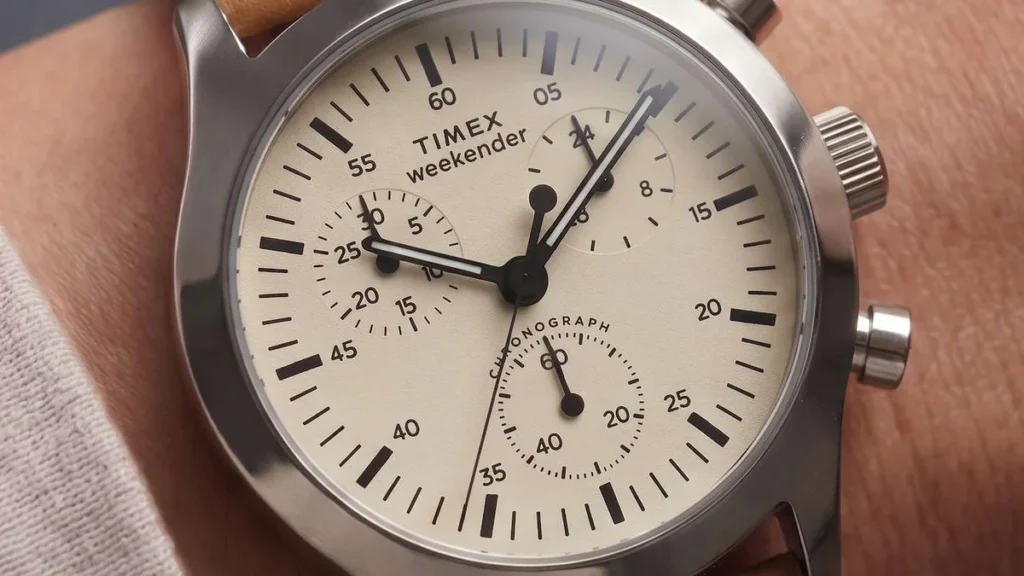
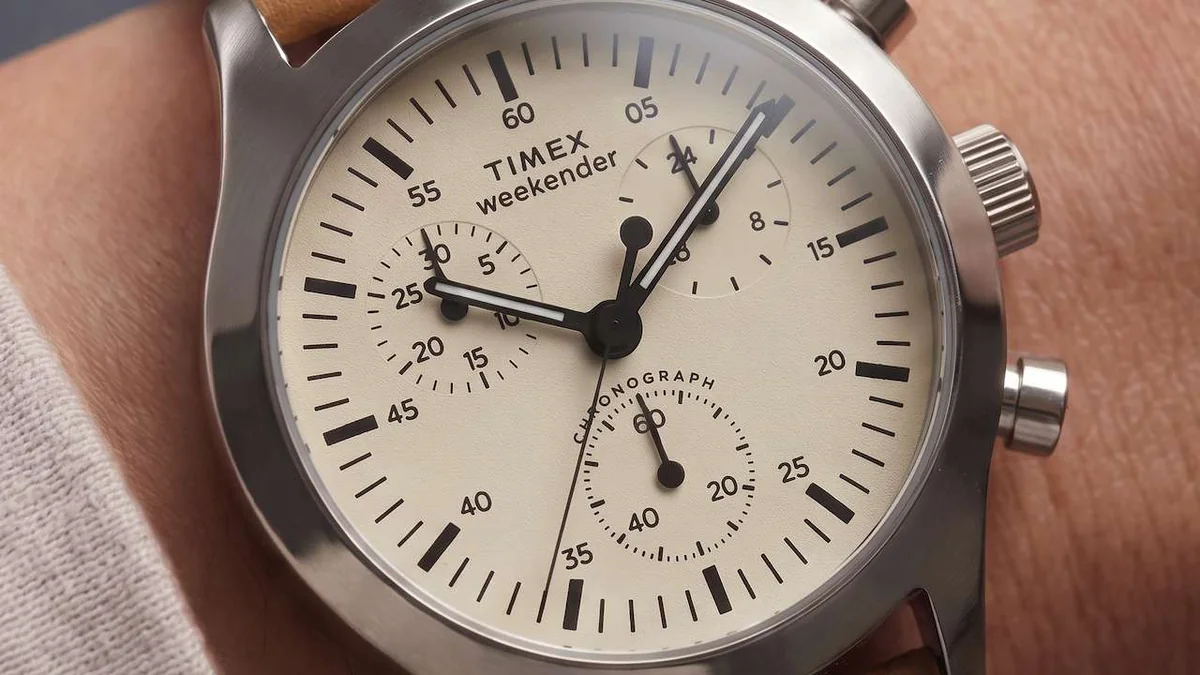
The Timex Weekender New England Chronograph makes its case with restraint. The Amazon listing shows a 40mm stainless steel case, a brown leather strap, a cream dial, stick markers, luminous hands, and quick release spring bars. Nothing exotic. The appeal is the balance — a warm dial, a narrow visual footprint, and enough detail to keep the watch from reading like a blank instrument panel.
Not every object has to announce what it cost. That’s the whole pitch of the Weekender: a clean everyday watch that feels intentional without turning the purchase into a status exercise. The weak point is equally clear — the current listing has no independent long term accuracy data, and the $189 price is higher than the $149 anchor in the older scout brief. I’d rather you know that before you buy than discover it at checkout.
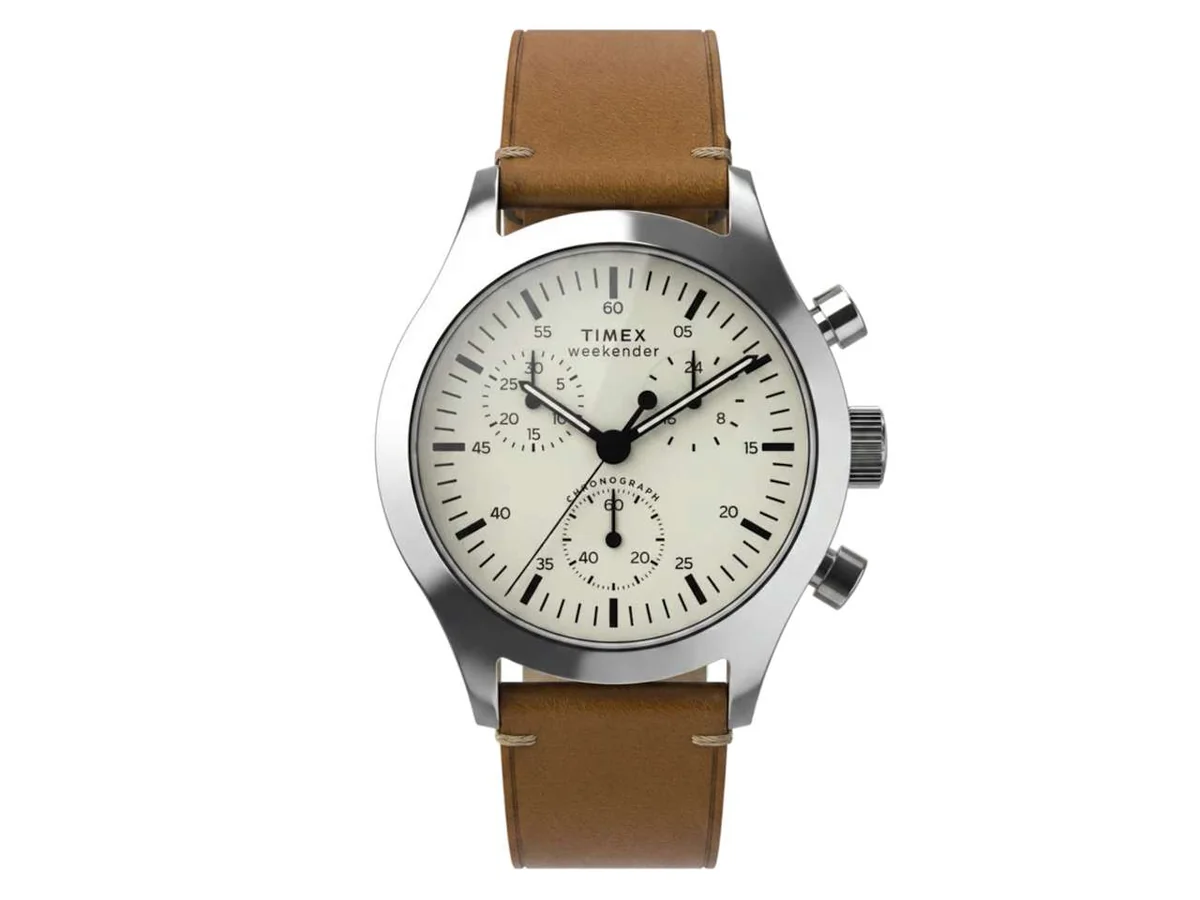
Timex Weekender New England Chronograph 40mm Leather Strap Watch — $189 · Where to buy on Amazon
If your priority is a low friction watch for jeans, office clothes, or a weekend shirt, the proposition is easy to understand. If you want a visible mechanical movement or a more substantial bracelet, the next steps up exist for a reason.
The Seiko 5: you’re buying the hobby
At $365 on Amazon, the Seiko 5 Sports SRPD55 changes the question from appearance to participation. Its 4R36 automatic movement supports manual winding, and the listing identifies a day and date calendar, Lumibrite hands and markers, a rotating bezel, a Hardlex crystal, and 100 meter water resistance.
That’s a different kind of value than the Timex. An automatic gives you a small mechanical system to live with — the ritual of keeping it wound, and the honest reality that mechanical timekeeping isn’t quartz precision. The 4.5 star rating from 209 Amazon ratings shows a real ownership trail, although marketplace ratings can’t replace a controlled accuracy test.
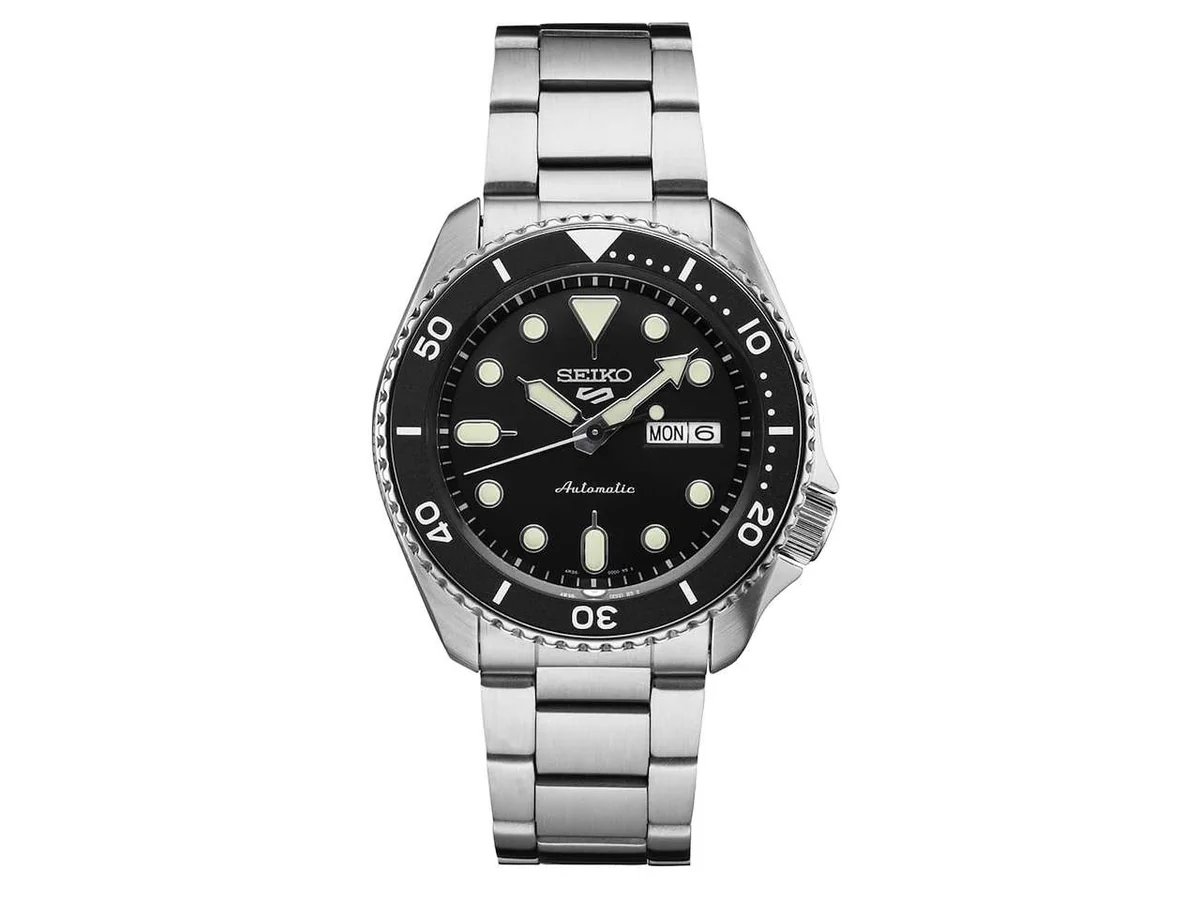
Seiko 5 Sports SRPD55 — $365 · Where to buy on Amazon
Worth it if the movement itself is part of the attraction — the winding ritual is the product as much as the timekeeping. Skip it if you want a watch that simply asks nothing of you.
The Tissot PRX: quartz as a design purchase
The Tissot PRX Quartz (T1374101109101) sits at $450 on Amazon, and its pitch is almost the reverse of the Seiko’s. It’s a stainless steel PRX with a quartz movement, sapphire crystal, 100 meter water resistance, and an interchangeable quick release bracelet. The money goes toward the integrated bracelet shape, the slim 1970s inspired profile, and the Swiss brand position — not toward a mechanical movement.
That’s where the comparison gets useful. A quartz watch at $450 looks irrational if you judge every watch by movement complexity. It makes more sense if the object on your wrist is part of your wardrobe. The PRX is the clearest choice for someone who wants a recognizable design language — not the visual looseness of a field watch, not the sportier language of the Seiko.
One buying consideration: the Amazon listing shows a 4.0 star rating from 27 ratings, which is a thin public sample beside the Citizen’s 1,508 and the Seiko’s 209. That doesn’t prove a quality problem. It does mean you shouldn’t treat the rating as a decisive signal.
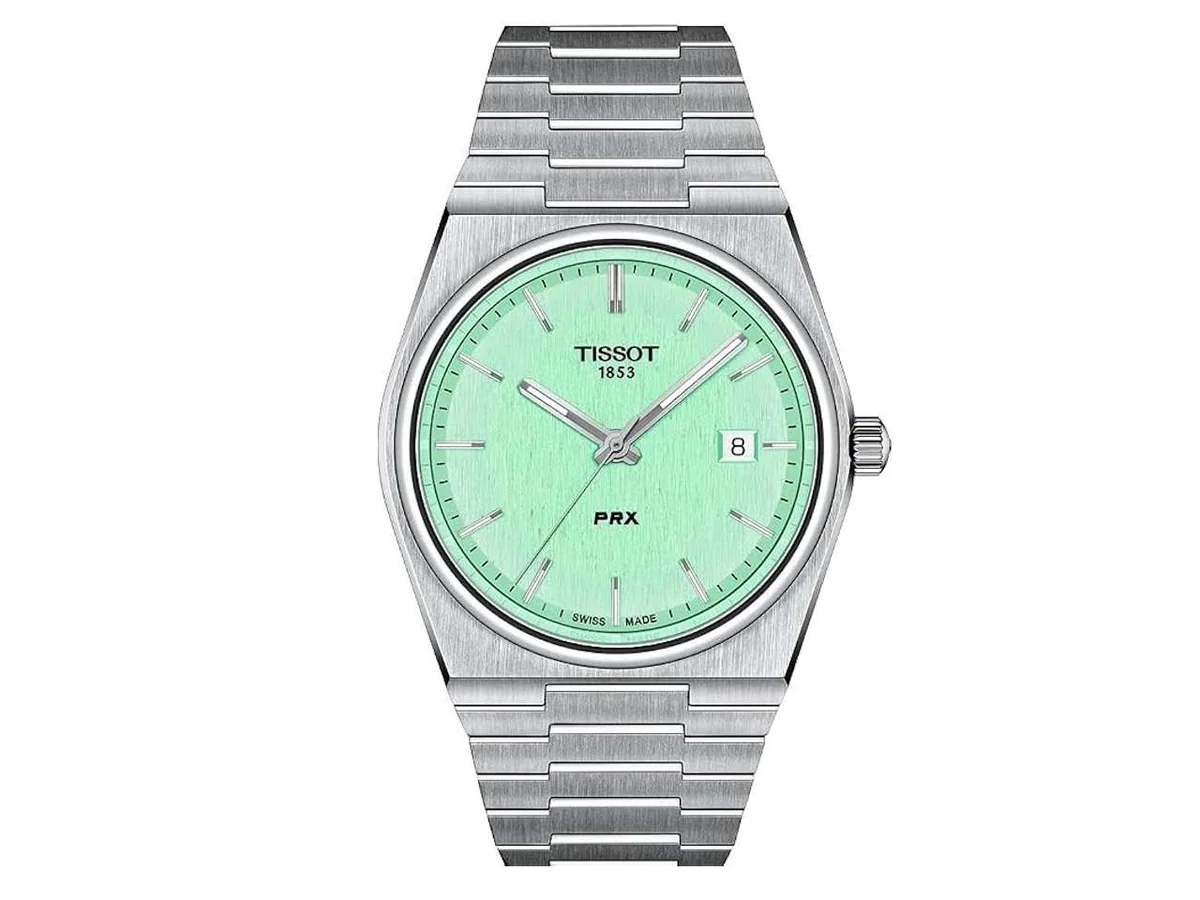
Tissot PRX Quartz T1374101109101 — $450 · Where to buy on Amazon
The Citizen: the ownership math wins
Citizen’s Eco Drive Weekender Garrison AW0050-82E is the practical outlier. Amazon lists it at $147, with a 43mm stainless steel case and bracelet, a black dial, Arabic markers, luminous elements, a mineral crystal, 100 meter water resistance, and a light powered Eco Drive movement. Because the system runs from light, the usual battery replacement routine disappears from the ownership plan entirely.
That doesn’t make it the most interesting watch here. It makes it the easiest one to explain. You get a readable field watch layout, a metal bracelet, day and date display, and light powered movement — without stepping into automatic upkeep or Swiss design pricing. The 4.5 star rating from 1,508 Amazon ratings gives it a much larger ownership sample than the Tissot, which is exactly the kind of signal the radar likes to see.
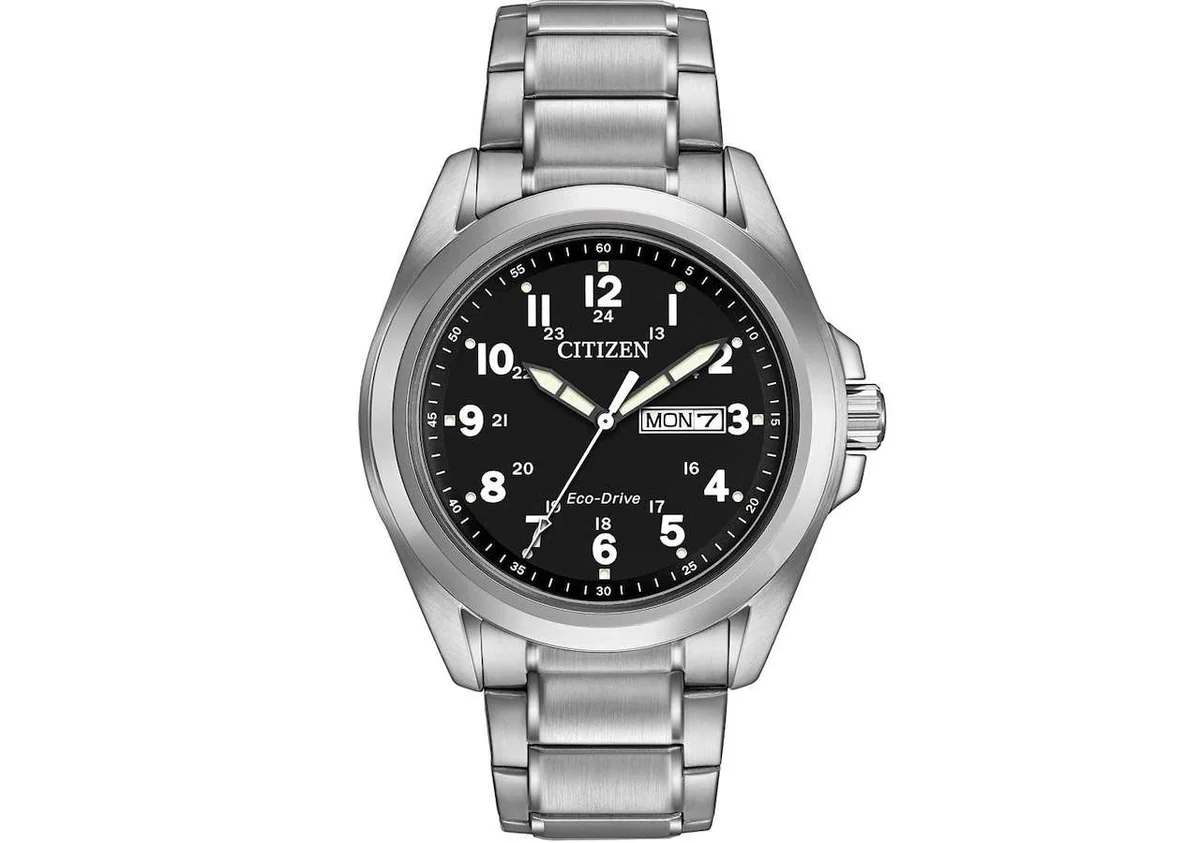
Citizen Eco Drive Weekender Garrison AW0050-82E — $147 · Where to buy on Amazon
What the price ladder actually buys
None of the four descriptions requires pretending one category defeats the others. The jump from Timex to Seiko isn’t a jump from cheap to good — it’s a jump from a straightforward quartz style watch to an automatic system with more personality and more upkeep. The jump from Seiko to Tissot isn’t a pure technology upgrade — it’s a move from mechanical character to bracelet design and Swiss identity.
And that’s why any four figure comparison needs care. A four figure watch can deliver finishing, movement refinement, service support, and brand history that these models don’t promise. But if your actual need is a clean daily timepiece, spending five times the Timex price doesn’t automatically produce five times the daily utility. That’s cost-per-wear logic, and it’s the reason I keep the $147 Citizen on my radar as a keeper.
Worth It or Skip It
Worth it: the Citizen at $147 if you want a watch that asks nothing of you, the Timex at $189 if you want restrained design, the Seiko at $365 if the mechanical hobby is the point, the Tissot at $450 if the integrated bracelet design is why you want a watch at all. Skip the whole ladder if you only want notifications or a phone companion — a traditional watch is deliberately narrow, and that’s its strength.
Trend Signal: the quiet watch is the signal
The loud watch — big case, obvious logo, maximum contrast — has been the dominant wrist trend for a cycle now. What’s moving in the retail data and street style I track is the opposite: warm dials, slim profiles, integrated bracelets, pieces that disappear into an outfit instead of announcing it. If you’re adding one watch to a capsule wardrobe, the signal says: pick the one that works with everything, not the one that works for one outfit.
Which one is for you
Choose the Timex if you want the visual language of a proper watch without a new hobby — the $189 price makes it less of an impulse buy than the older $149 figure, but the design stays focused and easy to live with. Choose the Citizen if you want the least maintenance. Choose the Seiko if the movement itself is part of the attraction. Choose the Tissot if the bracelet and case shape are the reason you want a watch in the first place.
A note from Sophie: I’ve bought into plenty of accessories I later donated, and a watch is the one purchase where the wrong call costs you a lot of daily visibility. So I’d start at the price that matches the job you’re actually hiring it for — not the price that feels like a statement. Stay on the signal.
Keep Reading
- Victoria’s Secret PINK: The 6 Back-to-Campus Pieces Wo
- Beach Bags That Actually Earn Their Place in My Summer (2026
- Best Sundresses for Warm Days (My Revolve Edit)