
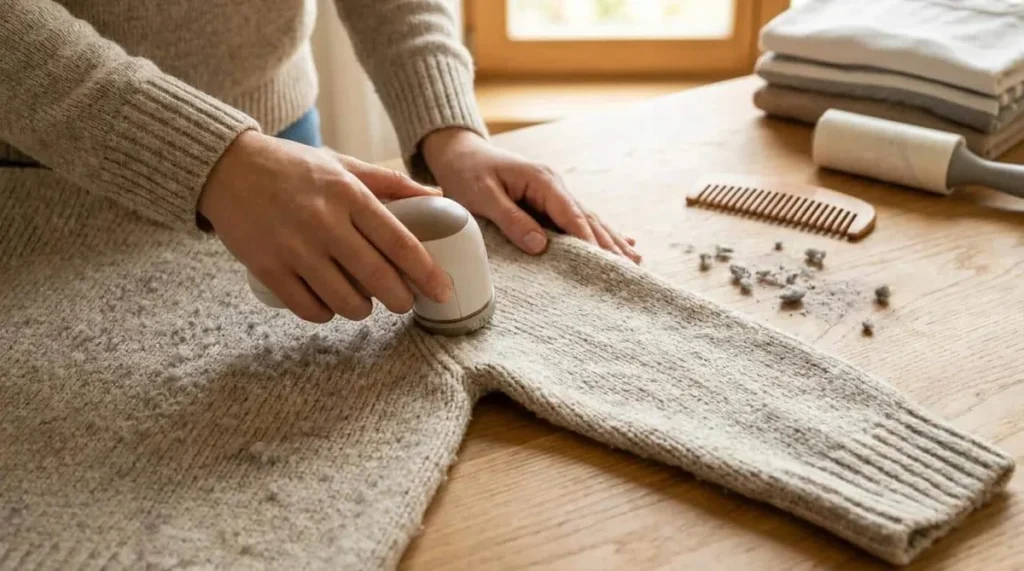
Pulling my favourite knit out for a chilly day, I spotted it again: little fuzzy balls across the chest and sleeves. The sweater still fits, still feels soft — but from a distance it reads ‘last season’s charity shop’.
After six years in trend forecasting, I’ve learned to trust fabric behaviour the same way I trust a trend signal. Pilling is one of the most overblown signs of ‘wear’ out there. It’s a surface problem, not a quality verdict — and it’s fixable in one sitting, the right way.
What’s actually happening to your fabric?
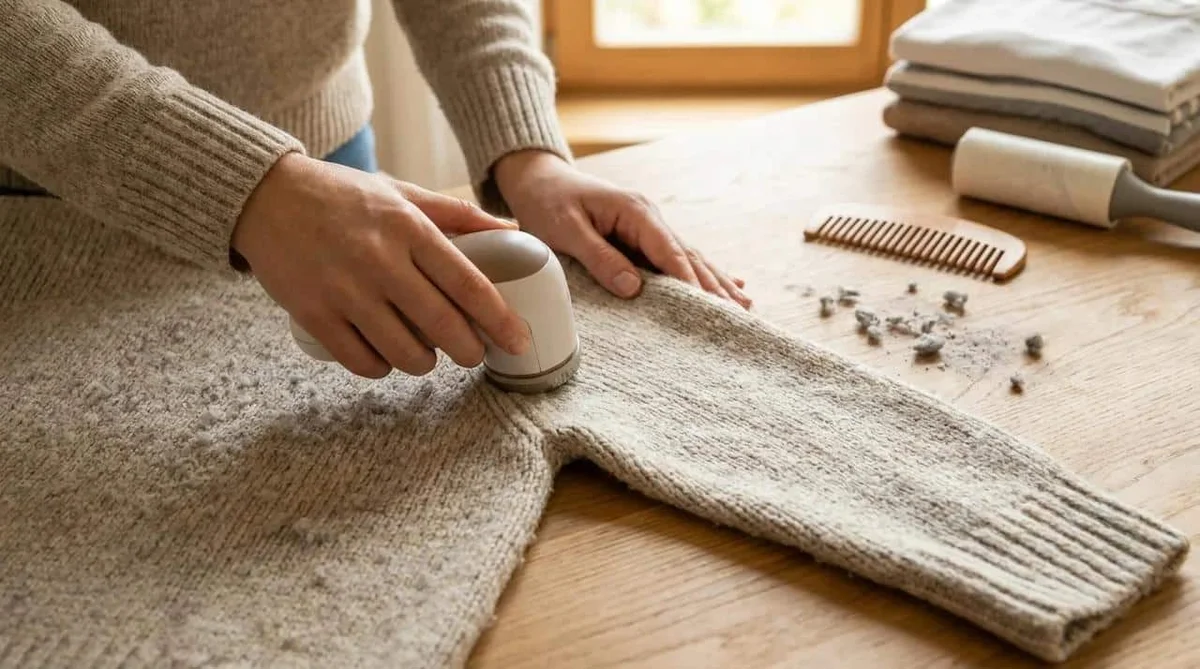
Pilling is loose surface fibres breaking away and knotting into tiny balls. It happens in the zones that take the most rubbing: underarms and sleeves on knits and activewear, waistbands and inner thighs on fitted trousers, and anywhere a bag strap or furniture touches the garment.
It’s not your fault, and it’s not the fabric’s. Three things feed it:
- Friction. Repeated rubbing from skin, bags, and other clothes breaks loose fibres that twist together.
- Washing and drying. Hot water, harsh cycles, and high heat weaken fibres so they loosen and tangle faster.
- Fibre length. Shorter or weaker fibres in wool, cotton, acrylic, and blends release more easily than longer, stronger ones.
How to remove pilling without damage
The right tool depends on the garment. Thick knits can take a shaver; anything delicate needs a softer touch. Here’s the order I work in.
1. Fabric shaver for large areas
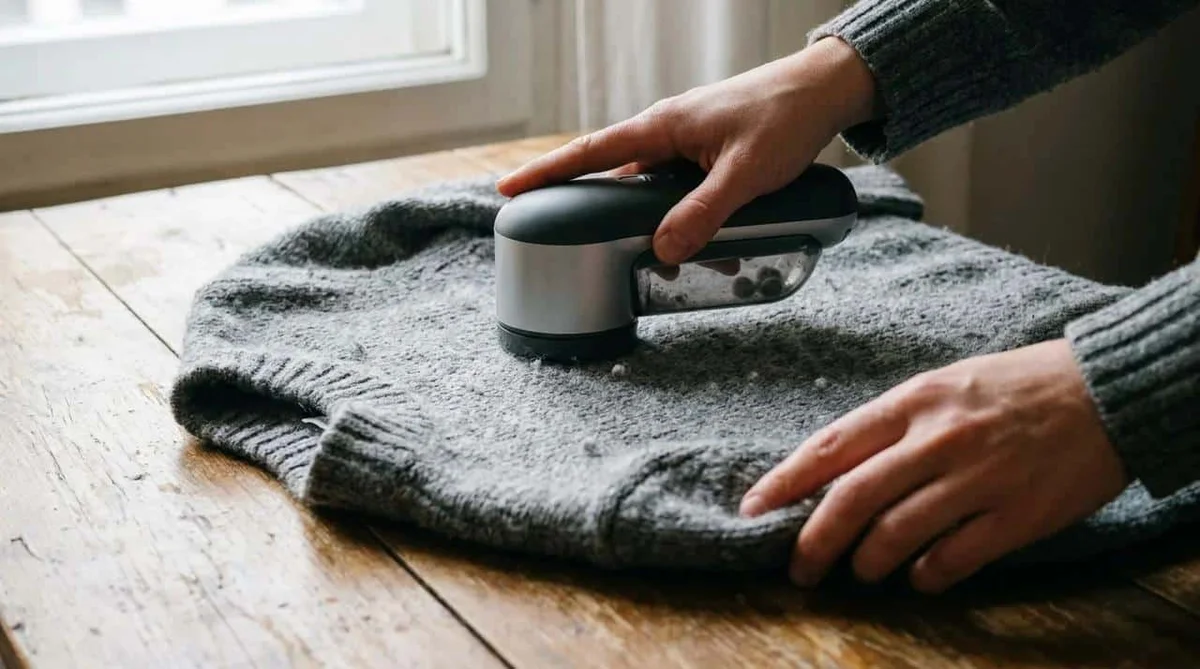
A fabric shaver is the fastest route on heavily pilled sweaters, acrylic knits, cotton knits, and sturdier wool pieces. Lay the garment flat, keep the fabric slightly taut, and move the shaver in light passes — don’t press. Go slow around seams and thinner panels, and empty the lint container when it fills.
Skip the shaver on loose, delicate knits. They’ll outpace you.
2. Fabric comb for sweaters and fine knits
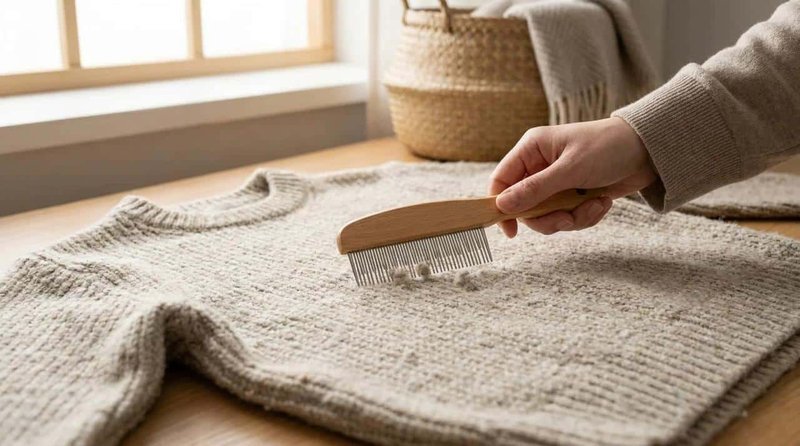
A fabric comb has fine teeth that lift pills away without the aggression of a powered tool. It’s the one I reach for on wool sweaters, cashmere, and anything I’d be nervous about. Hold the garment flat, use short light strokes, and let the comb do the work. More control, less risk.
3. By hand, for the pieces that matter
For a silk blend or a fine knit that can’t take tools, pick pills off by hand or trim the stubborn ones close to the surface with small scissors. It takes longer, but it’s the safest option — no damage to the fabric. Pull hard and you’ll stretch the shape, so work gently.
4. Lint roller for the finish
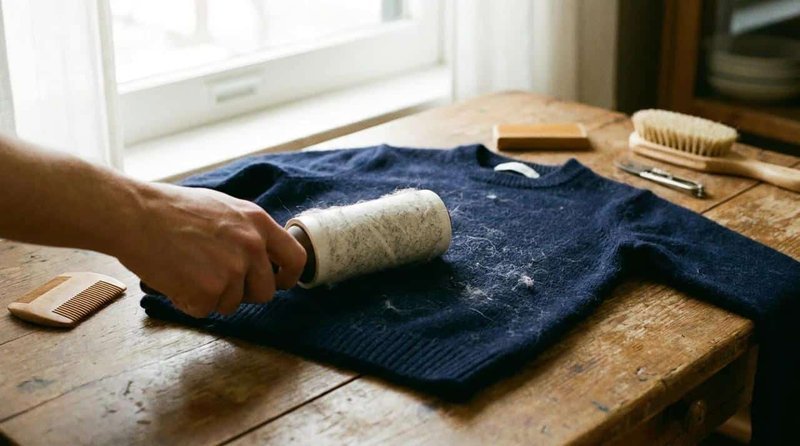
A lint roller won’t remove attached pills, but rolled gently in one direction it clears the loose fuzz left behind and leaves the surface looking clean. It’s a thirty-second step that makes the whole fix look deliberate.
Quick reference — tool to grab:
| Tool | Best for | Steer clear |
|---|---|---|
| Fabric shaver | Sweaters, blankets, coats | Very thin fabrics |
| Fabric comb | Wool and knitwear | Loose delicate weaves |
| Lint roller | Surface fuzz | Deep pills |
| Small scissors | A few stubborn pills | Large areas |
| Soft brush | Delicate fabrics | Heavy pilling |
Stop it coming back
Removing pills fixes today. Care habits fix the next six months.
Wash inside out
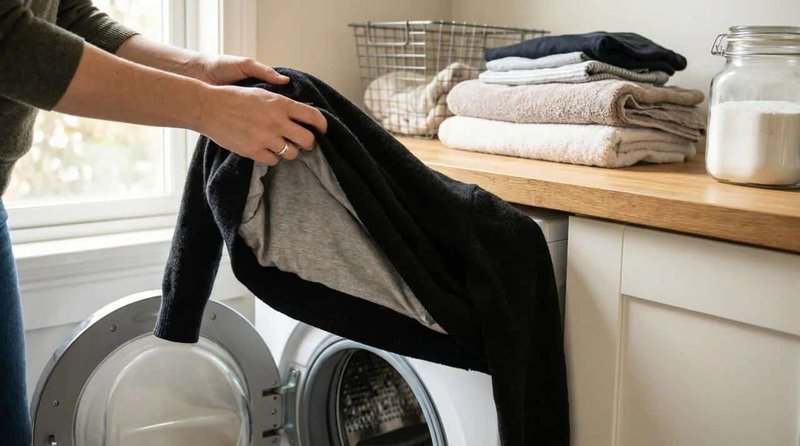
Turning garments inside out before washing shifts most of the friction to the side you’ll never see. It also protects colour, and it matters most for sweaters, leggings, and darker pieces.
Go gentle on settings
Strong cycles put extra pressure on fibres. Cold water, mild detergent, and delicate cycles make a real difference — check the care label first, especially on wool and knitwear.
Keep the heat down
High heat weakens fibres and sets up the next round of pills. Air-dry when you can, especially knits and delicate pieces. If a stronger fabric has to go in the dryer, use low and take it out the moment it’s dry.
Store it right
Friction happens in the closet too. Fold knits instead of hanging them so they don’t stretch, don’t overstuff shelves, and keep rough fabrics like denim away from soft ones.
Which fabrics pill — and which don’t
Fibre behaviour is the real predictor here, and it’s worth knowing before you buy.
More likely to pill: acrylic (short fibres loosen and twist easily), polyester blends (they hold onto pills instead of shedding them), soft fleece (the fuzzy surface gives fibres somewhere to gather), and loose knits (open weaves let fibres break free and collect).
More resistant: linen (strong, longer fibres stay put), long-staple cotton (fewer fibres break away in the wash), and tightly woven fabrics in general (a close weave keeps surface movement low).
No fabric is fully pill-proof. But longer fibres and a stronger construction hold their finish for a lot longer — which is exactly the cost-per-wear logic I apply to everything on my radar.
While everyone chases new silhouettes, a quieter signal is building: buyers are repairing, de-pilling, and re-wearing what they already own instead of refreshing the whole closet. It’s the cost-per-wear mindset made visible. One fabric shaver and a lint roller in your drawer are the whole toolkit — and they’ll outlast most of this season’s trends.
FAQ
Not forever — but gentle washing, careful drying, and choosing durable fabrics slow it down a lot and keep pieces smoother.
Not always. It depends on fibre type and construction. High-quality wool and cashmere can pill; the price tag doesn’t settle it.
Pills are loose fibres that have twisted into small balls on the fabric. Fuzz is loose fibres sitting on the surface, and lint is what you collect when you roll them up.
It reduces friction on the outer surface, so it helps — but it won’t stop fibre breakdown on its own. Combine it with gentle settings and lower heat.
Not always. Fibre quality, fabric construction, and your care habits matter more than the price. Premium fabrics can pill too.
A note from Sophie: I’ve donated far too many perfectly good knits because of pilling. That’s the expensive kind of mistake — and the easiest one to stop. Worth it? The shaver, for sure. Worth your attention? Everything else here. Stay on the signal — Sophie